Kelly Bescherer

Kelly Bescherer is a PhD candidate in the Cultures of Critique research training group and working in close collaboration with the DigID project as an associated researcher. Her work explores identification as a site of epistemic conflict, focusing in particular on the role of identificatory practices in Germany and the EU's politics of deportation. As part of this research, she is also investigating the impacts of EU initiatives for digital population registration in Senegal and throughout West Africa. Kelly holds an M.A. in Social Sciences and worked for several years in the field of immigration law prior to starting her PhD.
Ina Dubberke

Ina Dubberke works as a project manager at the Centre for Digital Cultures (CDC) at Leuphana University of Lüneburg. She holds a Bachelor's degree in Applied Cultural Studies (Leuphana University) and in Accounting & Management (San Angelo University, Texas / USA). Since 2014, Ina has been supporting and coordinating various research projects at the Centre for Digital Cultures (CDC). In this capacity she also acts - since February 2023 - as the project manager of the ERC-project 'DigID - Doing Digital Identities'. Since June 2022, she also supports and coordinates the newly founded Leuphana Institute for Advanced Studies (LIAS) in Culture and Society at the Leuphana.
Salah El-Kahil
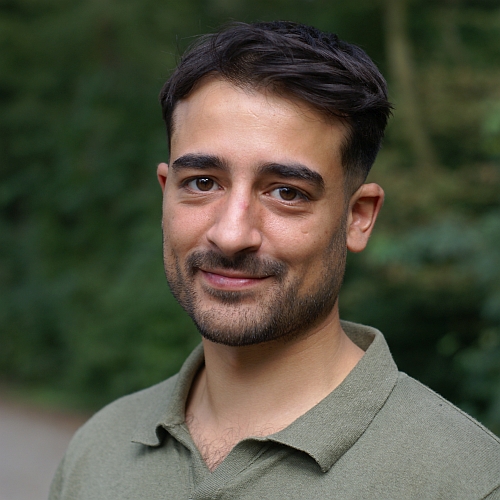
Salah El-Kahil is a PhD candidate at Leuphana University Lüneburg, holding bachelor's and master's degrees in sociology. He has contributed to projects centered around migration, social policy, social theory, and labor sociology. His research has investigated data and security, exploring how security agencies' practices influence national and cultural identity narratives. In 'Doing Digital Identities', Salah conducts a case study examining the social and political implications of emerging digital ID infrastructure in Germany, paying particular attention to identity wallets.
Sindhunata Hargyono

Sindhunata Hargyono has successfully defended his Ph.D. in Cultural Anthropology at Northwestern University in August 2023. His PhD-research has explored the work of state power at the margin, with his latest project focusing on the political intersection between aesthetics and infrastructure in the context of Indonesian border infrastructure development. His research interests lie in the epistemology of state rule, infrastructure politics, and citizenship. He will contribute to the DigID project with ethnographic research about the introduction of digital statist identity in Indonesia, especially how it produces a new landscape of difference in the experience of citizenship.
Laura Lambert

Laura Lambert is a postdoctoral researcher in the DigID project with a focus on Sierra Leone. She holds an M.A. in Social Sciences (Humboldt University) and a PhD in Social Anthropology (Martin Luther University), which was funded by the Max Planck Institute for Social Anthropology. Based on an in-depth ethnography, Laura’s PhD research examined the EU externalization of refugee protection to Niger. Among her main research interests are the remaking of European migration control and asylum policies in the cooperating African third states, asylum and migration bureaucracies, migrant struggles, future-making, infrastructures, and international organizations.
Oisin O’Brien

Oisin O’Brien is a PhD candidate at Leuphana university of Lüneburg. He holds a master’s degree in Cultural Anthropology from the University of Amsterdam, where he specialised in visual anthropology. During his master’s he completed his first ethnographic film titled “The White Ship” which focussed on national heritage problems and architectural symbolism in Tallinn, Estonia. His research interests include post-soviet urban space, national division and digital societies. Within this DigID project, Oisin will explore the integration of digital identification into the everyday lives of Estonians and how digital ID schemes are designed as trusted services to guarantee their widespread use in Estonia.
Stephan Scheel

Stephan Scheel works as a Professor of Political Sociology at the Leuphana University of Lüneburg and is the Principal Investigator of the ERC-project ‘DigID – Doing Digital Identities’. In general, Stephan’s research interests lie at the intersection of critical border, migration and security studies as well as citizenship and science and technology studies. In context of the DigID-project, Stephan will be responsible for the country case study of Malawi where he will study the implications of a large-scale registration campaign, which was conducted by the government in 2017, for citizen-state relations.